
E-book: 40 Ready-to-Use AI Prompts to Transform Your Product Catalog Management
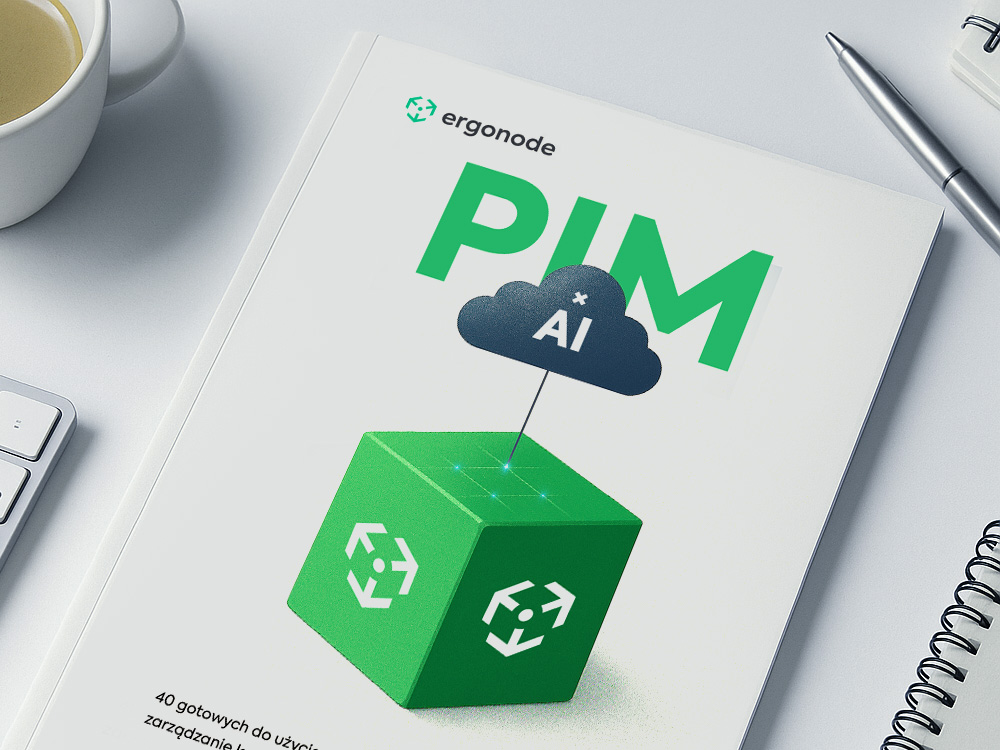
Teach AI to speak your catalog's language.
Ready-to-paste AI prompts that generate product names, descriptions, and specs — for 9 industries, scaling from a single product card to tens of thousands of SKUs at once in Ergonode PIM.
Not another AI guide — a working toolkit
No theory detached from the tool. Every prompt in this book is built to run inside a real product catalog, on real data.
Prompts ready to paste
No writing from scratch — tweak them to fit your own catalog and brand voice.
Industries, real examples
From furniture to food, each set carries a tone matched to its category.
Meta titles & descriptions
Every industry section covers content that's optimized for search, not just sales copy.
Scalable through variables
Learn the #variable_code system that runs one prompt across your whole catalog.
9 industries, one prompt set ready to paste
Each industry includes a complete set: product name, SEO description, meta title/description, and care or safety warnings where relevant.
Furniture & Interiors
Name, description, SEO meta — the reference example used throughout the book.
Cosmetics
Includes a safety-composition analysis for storage warnings and allergens.
Clothing & Footwear
Adds fabric care instructions alongside name and description prompts.
Building Materials
Technical, factual tone written for contractors and B2B buyers.
Bicycles
Technical specs paired with a lifestyle narrative for city riders.
Sporting Goods
Calm, wellness-driven tone for home and gym training gear.
Electronics & Lifestyle
Modern, dynamic tech-lifestyle voice for headphones, wearables, and more.
Power Tools
Professional, no-fluff tone for semi-professional and DIY buyers.
Food & Drink
Friendly, educational tone plus consumption and storage warnings.
See these prompts at work inside Ergonode
The e-book shows real views from the system — not theory detached from the tool. Three concrete places where a prompt turns into product content.
Generate names & descriptions on the product card
Run the prompt directly on the card, check the result, correct it, and confirm. Ideal for content that needs a human touch — like a Meta Title, an Amazon description, or a name for Allegro.
.jpeg)
The same prompt for hundreds or thousands of products
Select your products, choose "Generate product descriptions," paste your prompt with #attribute_code variables, and confirm the result for the whole batch — with a "Try prompt" preview before anything changes.
.jpeg)
Content generates itself, in the background
A rules engine listens for product creation or changes, checks the conditions you set, and triggers content generation automatically — no manual prompting, for dozens of product groups and channels at once.
.jpeg)
The anatomy of a prompt that works the same for 10 and 10,000 products
The book's most important lesson: a good product prompt isn't creative writing — it's a precise instruction built from catalog variables.
Write a description of a #product_type made of
#wood_type. Apply the #style style and #finish finish.
// tone of voice
Use a calm and natural tone, with an emphasis on quality and craftsmanship.
"Describe the product according to the latest writing standards."
"Describe your product in two paragraphs or less, focusing on material, function, and style. Use HTML tags to divide sections."
Tone of voice
Recipient (buyer persona)
Product data & parameters
Context of use
Sales differentiators (USP)
Utility benefits
Objection & response
Output structure (HTML)
AI doesn't replace the product team — it speeds up its most repetitive work.
Language models have changed how product information gets managed. It's no longer just automating repetitive tasks — it's real help in creating content that's consistent, attractive, and aligned with customer expectations across every sales channel.
AI can generate more than a description: complete product names, technical features, and marketing differentiators — faster and at a larger scale than traditional manual methods.
One prompt, thousands of products
Thanks to variables like #wood_type or #finish, the same prompt generates consistent content whether it covers 10 or 10,000 items.
3 places in Ergonode where prompts work
On the product card, in mass actions, and inside the automation engine — as a step in preparing products for publication.
No creative chaos
The e-book teaches you to limit model randomness — so results stay repeatable, not "different every time."
Three parts, one path
The fundamentals of a good prompt
How to build instructions for AI so results are consistent, predictable, and ready to publish without manual fixes — the rules of repeatability, scalability through variables, tone, and output structure.
Possibilities in Ergonode PIM
Three concrete places in the system where prompts turn into product content: the single product card, mass actions, and the automation engine.
40 prompts by industry
Ready-made templates for names, descriptions, meta title/description, and warning or care content — grouped by 9 industries, from furniture to food and drink.
"Customers don't buy a feature — they buy the effect they should feel after using the product. That's why it's worth arming AI with knowledge of the benefits, not just the specs."
e-book


